
In the printing industry, UV flexo inks have gained widespread attention and application as an efficient and environmentally friendly printing material. However, the question of whether their costs are high has been a topic of heated discussion within the industry.
In the current market environment, the price of UV flexo inks produced by Zhongzhixing is approximately $10 per kilogram, while other brands in the market are priced around $15 per kilogram. This is significantly more expensive than water-based flexo inks, which are about $5 per kilogram. Why are UV flexo inks considerably more expensive than water-based inks?
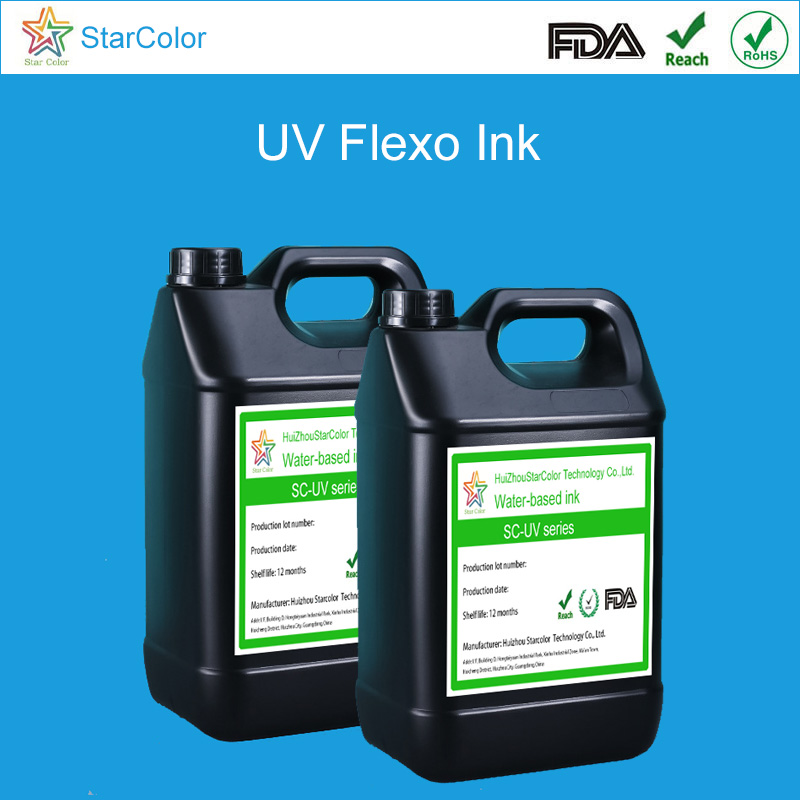
I. Basic Characteristics of UV Flexo Inks
UV flexo inks are a type of ink that utilizes ultraviolet light for curing, featuring fast drying times, vibrant colors, and strong adhesion. They are suitable for various flexible printing materials, such as paper and plastic films, meeting the diverse quality demands of different industries. Additionally, UV flexo inks perform excellently in terms of environmental protection, as they are solvent-free and can reduce pollution during use.
II. Cost Composition of UV Flexo Inks
The cost of UV flexo inks primarily consists of several components, including raw materials, production, transportation, and storage. Among these, raw material costs are the main source of expenses, including pigments, resins, and additives. Energy consumption, labor costs, and equipment depreciation during the production process are also significant cost factors. Furthermore, the transportation and storage of the inks require a certain level of investment.
III. Cost Comparison of UV Flexo Inks
When compared to traditional solvent-based inks, UV flexo inks do indeed have certain cost differences. On one hand, the raw material costs for UV flexo inks are relatively high due to the superior quality of the pigments and resins used, which meet higher printing quality standards. On the other hand, the production process for UV flexo inks requires specialized equipment and techniques, resulting in higher production costs. However, in the long run, the environmental benefits and efficiency of UV flexo inks can save companies substantial costs in environmental management and production, meaning their overall costs may not necessarily exceed those of traditional solvent-based inks.
IV. Factors Affecting the Cost of UV Flexo Inks
Several factors influence the cost of UV flexo inks, including fluctuations in raw material prices, production scale, technological level, and market demand. Variations in raw material prices directly impact ink costs; larger production scales typically reduce the per-unit cost; improvements in technology can lower production costs and enhance efficiency; and changes in market demand also affect ink costs and prices.
V. Ways to Reduce the Cost of UV Flexo Inks
To reduce the costs of UV flexo inks, companies can focus on several strategies: first, optimize raw material procurement channels to lower costs; second, improve production efficiency to reduce manufacturing costs; third, enhance research and development to improve ink performance and quality, thereby reducing waste rates; and fourth, strengthen market research to understand customer needs and improve product competitiveness.
VI. Conclusion
In summary, the cost of UV flexo inks is not static but is influenced by multiple factors. Although there are certain cost differences when compared to traditional solvent-based inks, the long-term benefits associated with their environmental friendliness and efficiency are undeniable.
 StarColor Printing Ink
Leave a comment