
Flexographic Water-Based Ink: Achieving High-Speed Printing?
With the continuous development of printing technology, flexographic printing has gradually become a common printing method in the packaging industry, especially in the fields of labels, cartons, flexible packaging, and more. Water-based inks, as an environmentally friendly and healthy option, have gained widespread application in the market.
New requirements for printing speeds are constantly being raised. In the early days when solvent-based inks were used, speeds could reach 700 meters per minute. However, after switching to water-based inks, it is evident that printing speeds cannot match the original rates. So, can water-based inks achieve high-speed printing?
I. Definition of High-Speed Printing:
In the flexographic printing industry, “high-speed” typically refers to the operation of printing machines with high production efficiency. Specific speed standards vary depending on different equipment and applications. Generally, the high-speed range for flexographic printing machines is approximately 300 meters per minute to 800 meters per minute. For some high-end equipment and specific materials, speeds can even exceed 1000 meters per minute. However, whether these speeds can be achieved depends not only on the performance of the printing machine itself but also closely relates to the characteristics of the ink.
II. Printing Speed of Water-Based Inks:
The printing speed of water-based inks is influenced by multiple factors. Compared to solvent-based or UV inks, water-based inks have a slower drying speed, posing higher requirements for printing speed. Typically, the use speed of flexographic water-based inks can reach 200 meters per minute to 500 meters per minute, which is a common high-speed printing range. However, under special conditions, by optimizing the ink formulation and drying system, the speed of water-based inks can potentially be further increased, approaching or reaching 600 meters per minute.
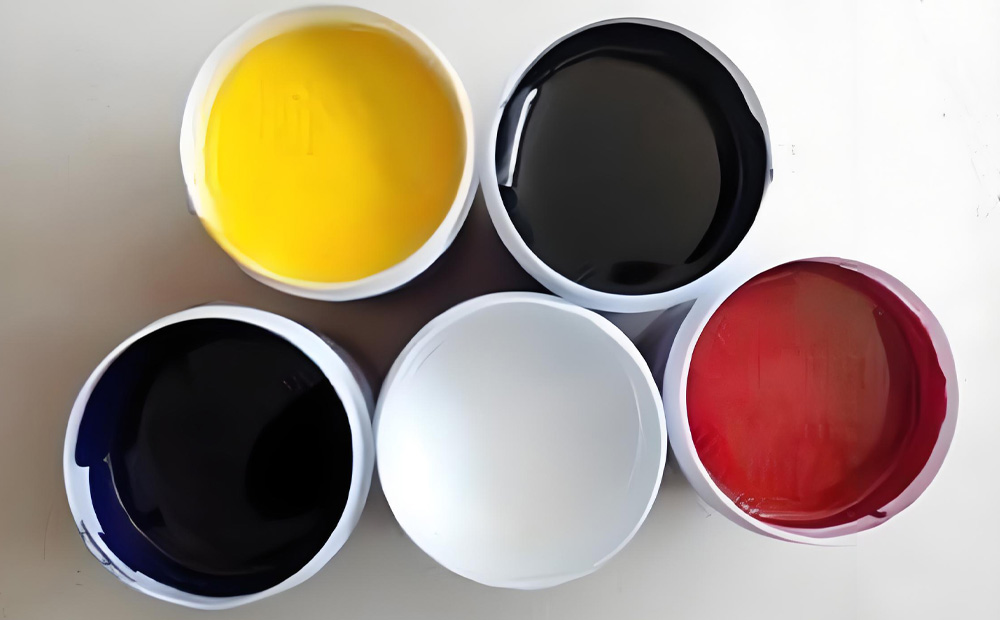
III. Factors Affecting the Printing Speed of Flexographic Water-Based Inks:
- Ink Drying Speed:
The drying process of water-based inks is one of the key factors affecting printing speed. Compared to the instant drying characteristics of UV inks, water-based inks require the evaporation of water to complete drying, thus requiring more time and heat. If the drying system (such as hot air, infrared, ovens, etc.) is inadequate, and water cannot evaporate quickly, it will affect the printing speed. - Rheological Properties of Ink (Viscosity and Fluidity):
The viscosity and rheological properties of water-based inks directly affect the ink transfer and coating effects. If the ink viscosity is too high, it may result in uneven ink transfer or unclear printing; conversely, if the viscosity is too low, it may lead to excessive printing and waste. Therefore, a reasonable ink formulation and adjustment of the ink’s rheological properties are crucial for ensuring smooth high-speed printing. - Printing Substrate:
Different substrates (such as paper, plastic film, metal foil, etc.) have different ink absorption and drying speeds. Some substrates may accelerate the drying of water-based inks, while others may require additional processing or longer drying times. In the high-speed printing process of flexographic water-based inks, selecting the appropriate substrate is crucial. - Equipment Performance:
The performance of high-speed printing equipment directly determines the ink transfer and drying effects. The speed, pressure, and coordination between the ink rollers and printing cylinders of flexographic printing machines all affect the coating effect of the ink. If the equipment cannot fully support high-speed operation, the ink performance may be compromised, resulting in decreased print quality. - Environmental Factors:
The temperature and humidity in the printing workshop also affect the drying process of water-based inks. Higher humidity may delay the drying speed, while lower humidity may cause the ink to crack or coat unevenly. Therefore, environmental control in the workshop is crucial for high-speed printing.
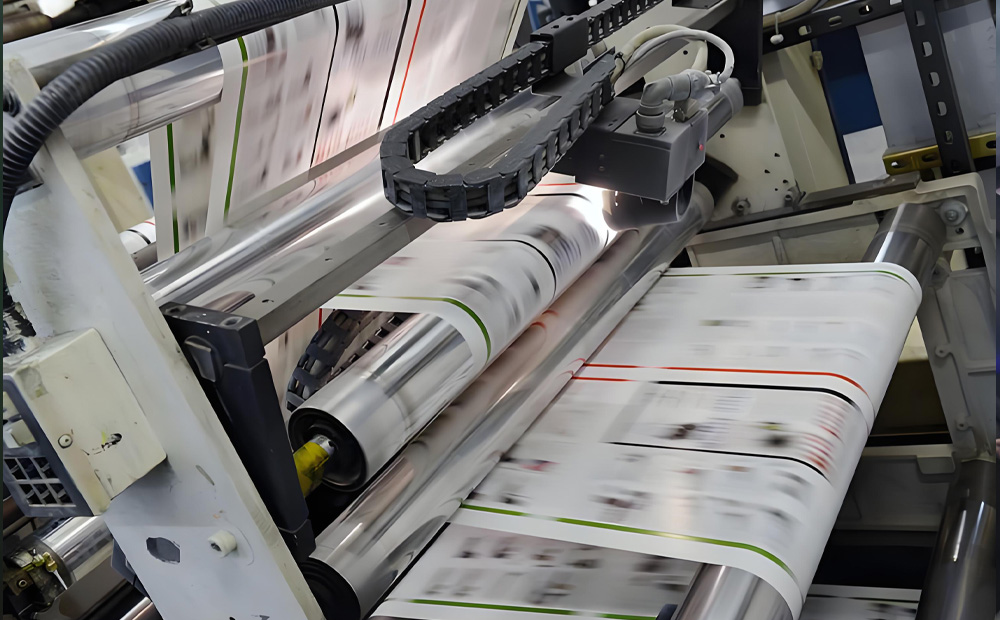
IV. How to Improve the Printing Speed of Water-Based Inks:
- Optimize Ink Formulation:
By adding specific drying additives and rheological modifiers, the drying speed and printing adaptability of water-based inks can be significantly improved. Additionally, adjusting the ink viscosity can maintain good ink transfer performance during high-speed operation. - Improve the Drying System:
Adopting more efficient drying systems, such as enhanced hot air or infrared drying systems, can accelerate water evaporation and thus increase the operating speed of the printing machine. - Select Appropriate Substrates:
When choosing printing substrates, consider their ink absorption and drying requirements, preferably selecting those that enhance drying speeds. - Equipment Upgrades and Optimization:
Regularly maintain and upgrade printing equipment to ensure it operates stably and adapts to high-speed printing requirements.
V. Conclusion:
Flexographic water-based inks can achieve high-speed printing under certain conditions, especially with appropriate ink formulations, equipment performance, and drying systems. Although the drying speed of water-based inks is relatively slower, by improving technology and optimizing production conditions, their high-speed printing potential remains significant. With advancements in flexographic printing technology, the application prospects of water-based inks in the high-speed printing field will become even broader.
 StarColor Printing Ink
Leave a comment