
I. Industry Trends and Environmental Demand
As global environmental regulations tighten (e.g., EU REACH, US EPA standards), traditional solvent-based inks are being phased out due to high VOC emissions and toxicity. Water-based inks, renowned for their low pollution and non-toxic properties, are emerging as the mainstream choice in the printing sector. Market data reveals the global water-based ink market surpassed $12 billion in 2023, with an annual growth rate of 6.8%, projecting to reach $14.5 billion by 2025. China, the world’s largest ink consumer, has seen water-based ink penetration rise from 22% in 2018 to 35% in 2023, driven by policy support and increased corporate environmental awareness.
To meet sustainability goals, research and development efforts focus on zero VOC emissions and high-performance output. StarColor, a Chinese high-tech enterprise, has addressed longstanding challenges like poor adhesion and slow drying through continuous innovation. Their products, certified under 18 international standards (e.g., FDA, EN71-3), set a green benchmark for the industry.
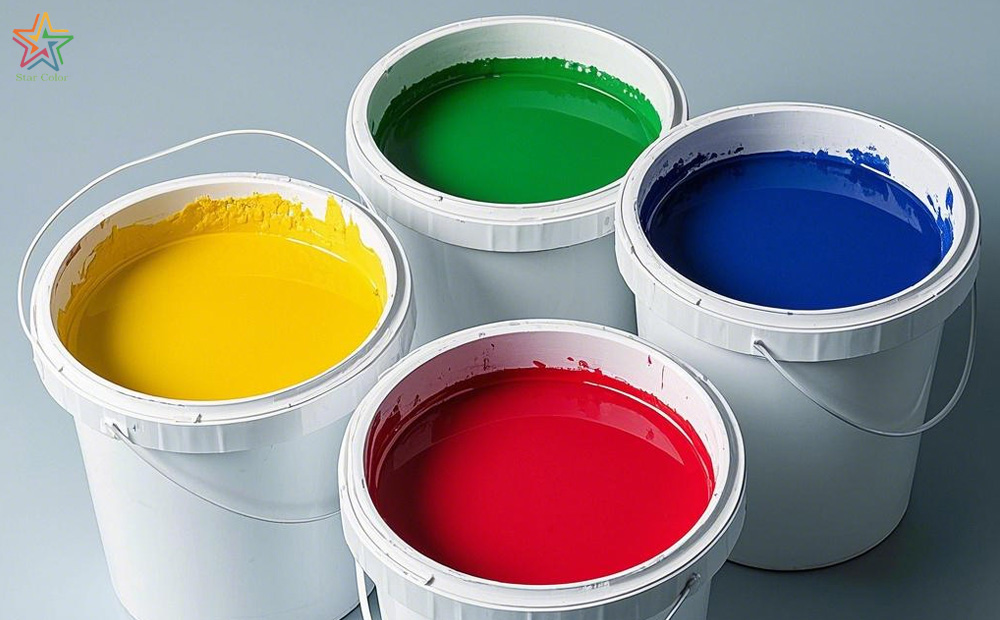
II. Key Components of Water-Based Ink Formulations
Formulating water-based inks requires precision in materials science and chemical engineering to balance environmental compliance and performance. Here’s a breakdown of critical components:
- Water-Based Resin Systems (30-50%)
- Acrylic Resins: Offer excellent adhesion and water resistance. Molecular weight (8,000–15,000 Da) and pH stability (8.5 ± 0.3) optimize film formation.
- Polyurethane Dispersions (PUD): Enhance flexibility and abrasion resistance for flexible packaging.
- Epoxy-Modified Resins: Provide high barrier properties for food packaging applications.
- Pigment Dispersion Systems (15-25%)
- Organic Pigments: High-performance options like phthalocyanine blue/green deliver 20% higher color intensity for premium printing.
- Inorganic Pigments: Nano-treated titanium dioxide improves opacity and dispersion stability.
- Dispersants: Polycarboxylates (0.5–1.2%) prevent agglomeration via steric hindrance.
- Functional AdditivesAdditive TypeKey IngredientsMechanismDefoamerPolysiloxaneReduces surface tension <35 mN/m to eliminate printing bubblesLevelling AgentFluorocarbonEnsures dynamic contact angle <15° for uniform coatingsAnti-Settling AgentFumed SilicaThixotropic index >3.5 prevents pigment sedimentation
- Water-Based Solvents (25-40%)
- Deionized Water: Conductivity <5 μS/cm ensures formulation stability.
- Co-Solvent: Propylene glycol methyl ether (<5%) balances drying speed and prevents excessive evaporation.
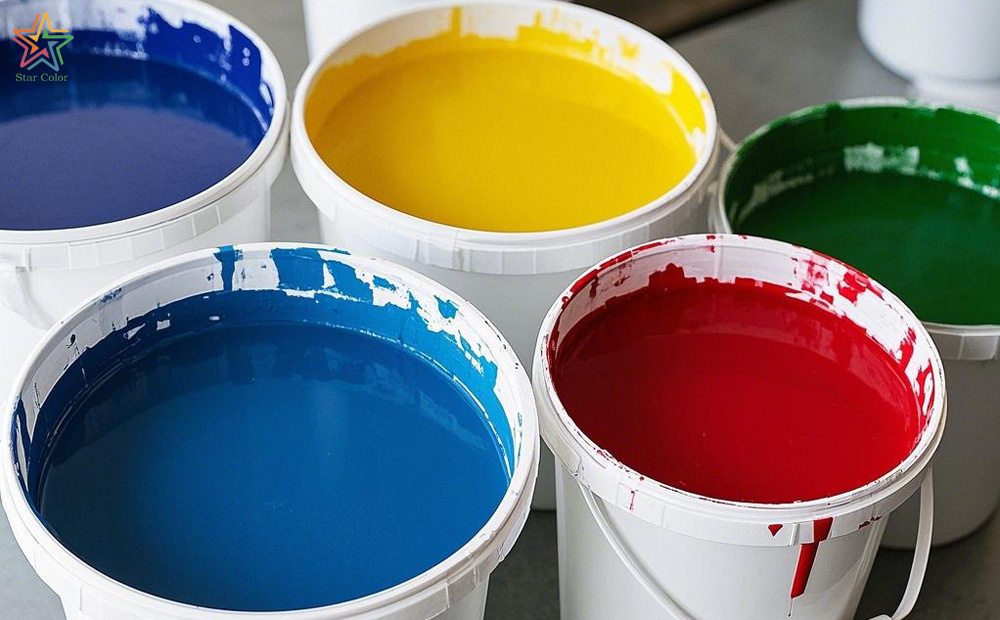
III. Technical Challenges and Solutions
- Drying Speed Optimization
Microemulsion technology (resin particle size 80–150 nm) paired with smart drying systems boosts printing speed to 180 m/min (vs. industry avg. 120 m/min) while cutting energy use by 40%. - Storage Stability
Controlling Zeta potential >│30 mV│ prevents pigment aggregation, ensuring 6-month shelf life without separation. - Printability Enhancement
Viscosity controlled at 15–25 seconds (Ford Cup #4, 25℃) minimizes clogging in high-speed presses. - Weather Resistance
UV absorbers combined with hindered amine light stabilizers extend outdoor durability to over 3 years. - Cost Reduction
40% bio-based material substitution maintains performance while lowering production costs.
IV. Future Directions: Sustainable Pathways
Driven by carbon neutrality goals, innovation will focus on:
- Bio-Based Resins: Plant-derived acrylics and polylactic acid (PLA).
- Smart Inks: Temperature-sensitive and photochromic formulations.
- Closed-Loop Recycling: Collaborative design of inks and packaging for higher rate of recovery.
StarColor leads the charge in advancing water-based inks for premium printing, driving the industry toward low-pollution, high-efficiency solutions.
Get Your Custom Solution Today: eva@starcolor-ink.com
 StarColor Printing Ink
Leave a comment