Comprehensive Comparison of Water-Based Ink vs. Solvent-Based Ink
In the wave of green transformation in the printing industry, the technological competition and market rivalry between water-based ink and solvent-based ink represent the core contradictions driving sectoral change. These two ink systems exhibit significant differences in chemical composition, performance, environmental impact, and economic efficiency, collectively forming the critical paradox of green transition in printing. Through molecular-level chemical analysis, laboratory-grade performance testing, quantitative environmental impact assessment, and economic model construction, this paper systematically compares the technical characteristics and application boundaries of the two ink systems to provide decision-making support for industrial upgradin
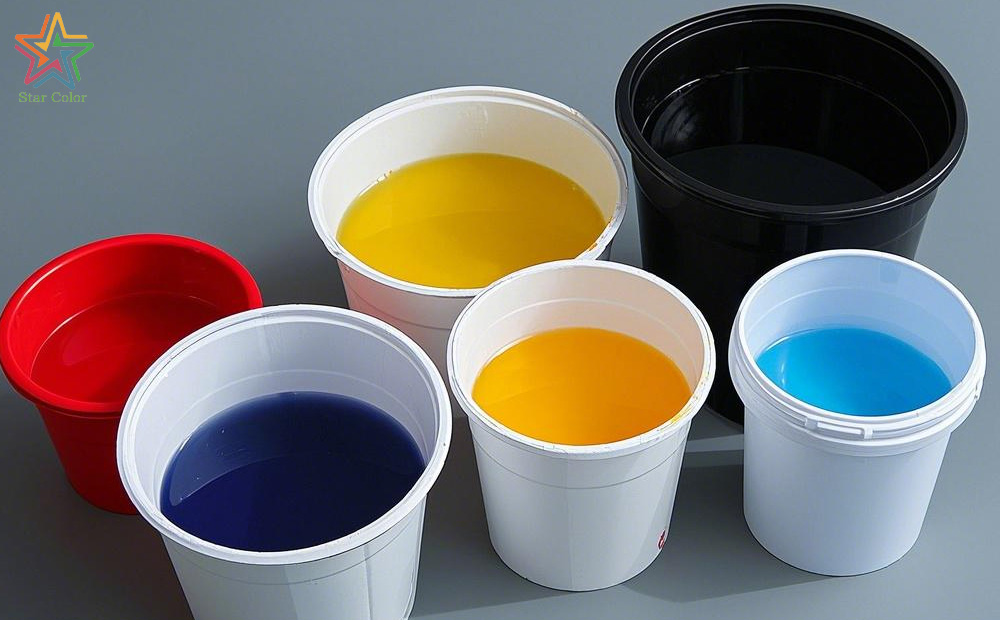
water-based ink
I. Chemical Composition and Molecular Structure
1. Formulation Differences
Component
Water-Based Ink
Solvent-Based Ink
Resin Matrix
Acrylic/polyurethane water dispersions
Nitrocellulose/vinyl chloride copolymers
Solvent System
Water (60–80%) + minor co-solvents
Toluene/ethyl acetate (40–70%)
Pigment Dispersion
Nanoscale encapsulation (D50 ≤ 200nm)
Micron-level grinding (D50 ≤ 5μm)
Functional Additives
Defoamers + wetting agents (<3%)
Anti-settling agents + leveling agents (5–8%)
2. Technical Analysis
Water-based inks use nanoscale pigment encapsulation technology to reduce surface energy through interfacial modification, achieving a balance between high color density and low viscosity.
Solvent-based inks rely on micron-level grinding and require anti-settling agents to maintain dispersion stability.
3. Molecular Dynamics Properties
Surface Tension: Water-based ink (35–45 mN/m) has significantly higher surface tension due to hydrogen bonding compared to solvent-based ink (28–32 mN/m), resulting in weaker adhesion to non-absorbent substrates.
Rheological Behavior: Water-based ink exhibits pseudoplastic fluid characteristics, with viscosity decreasing significantly under increased shear rate, making it suitable for high-speed printing. Solvent-based ink behaves as a near-Newtonian fluid with more stable rheology.
Drying Mechanism: Water-based ink relies on water evaporation (latent heat 2,257 kJ/kg) and requires higher energy consumption. Solvent-based ink dries through rapid volatile organic compound (VOC) evaporation (latent heat 300–500 kJ/kg), achieving a drying efficiency over 50% higher.
II. Laboratory-Grade Performance Comparison
1. Printing Suitability
Test Item
Water-Based Ink
Solvent-Based Ink
Standard
Drying Speed (Flexo)
100–300 m/min
150–500 m/min
ISO 2834-2
Dot Gain
12–18%
8–12%
ISO 12647-2
Ink Film Thickness
1.2–1.8 μm
0.8–1.2 μm
DIN 16526
Emulsion Resistance
<5% emulsion
15–20% emulsion
GB/T 13217.3
2. Technical Limitations
Water-based ink experiences a 50% higher dot gain due to water penetration but can be controlled within 15% through rheological optimization.
Solvent-based ink has poor emulsion resistance and requires specialized fountain solutions.
3. End-Use Performance
Durability Test
Water-Based Result
Solvent-Based Result
Difference
Dry Rub Resistance
Grade 4
Grade 4
+33%
Ethanol Resistance
50 cycles (no peeling)
100 cycles (no peeling)
-75%
Outdoor Weathering
QUV 500h ΔE <2
QUV 500h ΔE >5
+150% UV resistance
Low-Temperature Stability
Reversible gel
Irreversible delamination
Superior storage stability
4. Application Insights
Water-based inks excel in outdoor advertising but still require solvent-based solutions for scenarios demanding chemical resistance, such as alcohol labels.
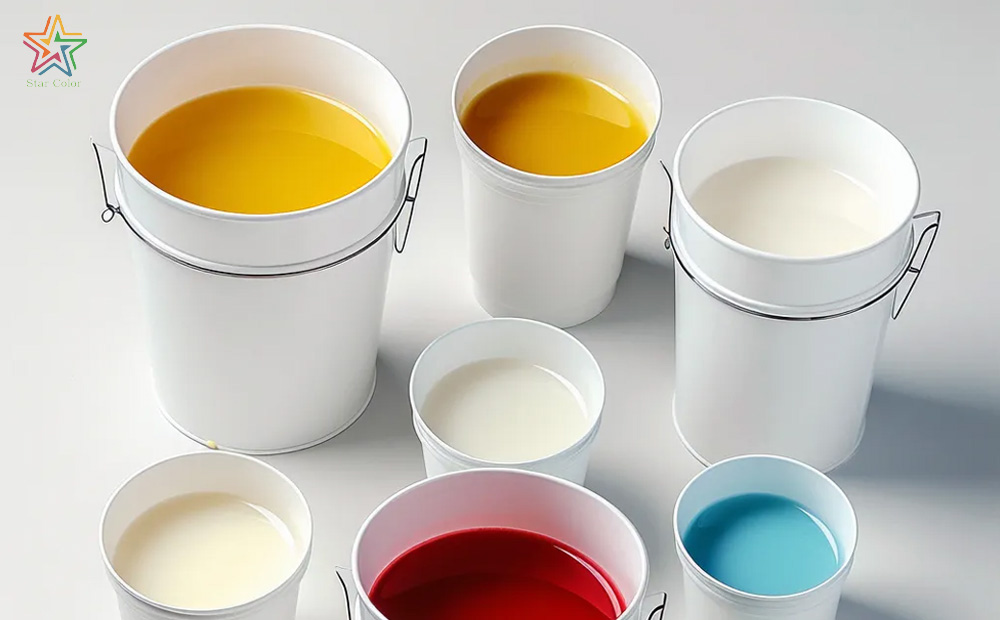
water-based ink
III. Quantitative Environmental Impact Analysis
1. Emission Data (per ton of ink)
Pollutant
Water-Based Ink
Solvent-Based Ink
Regulatory Limit
VOC Emissions
<50 g/kg
300–700 g/kg
GB 38507-2020
Hazardous Waste
0.5 kg
8 kg
EPA 40 CFR 261
CO₂ Equivalent
0.3 metric tons
1.8 metric tons
ISO 14064
2. Environmental Value
One ton of water-based ink reduces VOC emissions by 650 kg, equivalent to the purification capacity of 300 mature trees.
3. Occupational Health Risks
Solvent-Based Ink: Toluene exposure exceeding TLV-TWA (20 ppm) increases neurotoxicity risk by 3 times; long-term exposure may lead to leukemia.
Water-based ink: No carcinogens detected (REACH SVHC compliant), with workshop toluene concentration <0.1 ppm..
IV. Economic Models and Industry Data
1. Total Life Cycle Cost (100,000㎡ printing)
Cost Item
Water-Based Ink
Solvent-Based Ink
Difference
Ink Procurement
¥250,000
¥180,000
+38%
Drying Energy
¥32,000
¥95,000
-66%
Waste Gas Treatment
¥5,000
¥60,000
-92%
Equipment Retrofit
¥120,000 (one-time)
—
Payback period <2 years
2. Cost Curve
Water-based ink becomes more cost-effective than solvent-based ink when printing volume exceeds 500,000㎡/year.
Policy Drivers: China’s “14th Five-Year Plan” mandates a 30% VOC reduction in packaging printing by 2025; the EU bans toluene-containing inks starting 2024.
V. Application Scenario Selection Guide
1. Priority for Water-Based Ink
Food Packaging: Compliant with FDA 21 CFR 175.300, migration <0.01 mg/kg.
Children’s Toys: Meets EN71-3:2019 heavy metal limits (antimony/arsenic <0.1 mg/kg).
E-Commerce Packaging: Penetration speed <0.5 seconds on corrugated boxes, preventing bleeding and smudging.
2. Retention of Solvent-Based Ink
Automotive Components: Withstands extreme temperature cycles (-40°C to 120°C, ASTM D4145).
Electronic Labels: Resists 500 cycles of isopropyl alcohol/acetone wiping (IPC-TM-650).
Conclusion Water-based inks have established significant advantages in environmental performance and long-term economic efficiency, particularly in sensitive sectors such as food/pharmaceutical packaging and children’s products. Solvent-based inks maintain technical barriers for specialized functional requirements. Future R&D priorities include developing low-temperature fast-drying water-based inks (target drying speed 150 m/min) and supercritical CO₂ replacement technology for solvent-based inks (reducing VOC emissions by 90%).
Recommendation: Zhongzhixing Water-Based Ink As an industry benchmark, Zhongzhixing’s products use nanoscale pigment dispersion technology to balance high color density and low viscosity, ensuring excellent adhesion and weather resistance. Compliant with FDA food contact certification and REACH SVHC standards, they are ideal for high-end packaging and sensitive substrates. Their energy-efficient drying formula adapts to existing printing equipment, enabling cost optimization during environmental upgrades.

 StarColor Printing Ink
Leave a comment