
In the field of printing and ink technology, thermal transfer ink has become a core printing material in food packaging, industrial marking, and other fields due to its strong adhesion, bright color, and wide adaptability. Especially in food-grade printing, its safety compliance and technical stability are directly related to food safety and product quality.
This article comprehensively analyzes the core technical principles of thermal transfer ink, the requirements for food-grade applications, and practical pain points, providing professional and practical technical reference for industry practitioners and helping enterprises standardize production and improve product competitiveness.
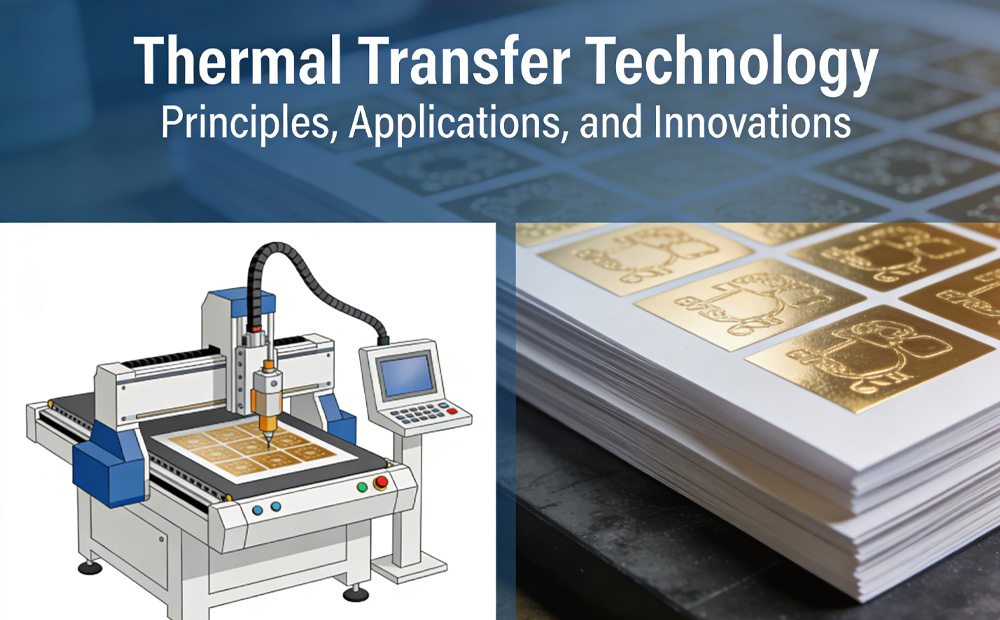
I. Core Technical Principles of Thermal Transfer Ink
Thermal transfer ink (also known as thermal sublimation ink) is essentially a disperse dye-based ink. The core difference from ordinary ink is that its color can only be transferred from carriers such as ribbons and transfer paper to the surface of the substrate and fixed after being heated at a high temperature of 120-200℃, focusing on three core steps: “thermal melting – transfer – curing”:
1. Thermal Melting: The equipment releases high temperature, which melts the disperse dyes and binder resins in the ink, breaks the binding force with the transfer carrier, and provides a channel for dye diffusion;
2. Transfer and Adhesion: Under the pressure of the equipment, the molten ink detaches from the carrier, penetrates into the surface layer of the substrate and forms a stable bond. The temperature, pressure, and speed must be accurately matched, otherwise, color blurriness and misalignment are likely to occur;
3. Cooling and Curing: The ink cools and solidifies quickly, forming a firm bond with the substrate, presenting a clear and wear-resistant printing effect. Uneven cooling is likely to cause adhesion and double images.
Compared with traditional solvent-based inks, thermal transfer ink does not require solvent volatilization, has no odor, no pollutants, fast curing speed, and high efficiency. It is the preferred choice for food-grade printing and conforms to the trend of green printing.
II. Core Requirements for Food-Grade Thermal Transfer Ink
Food-grade thermal transfer ink must strictly comply with the national standard GB 4806.14-2023 and meet the requirements of special scenarios for food packaging. The core requirements are as follows:
(1) Safety and Compliance Requirements: Eliminate Migration Risks
Inks that are in direct or indirect contact with food must focus on controlling migration risks: comply with the Overall Migration Limit (OML) and Specific Migration Limits (SML), and adapt to migration tests in high-temperature scenarios; strictly prohibit prohibited substances such as Primary Aromatic Amines (PAA), limit harmful components such as heavy metals and phthalates; control unintended additives (NIAS) that may be generated during high-temperature processing to ensure compliance with safety standards.
(2) Technical Performance Requirements: Adapt to Food Packaging Scenarios
It must have excellent performance to adapt to complex scenarios: high temperature resistance (withstand high-temperature processes such as heat sealing and retorting without fading or decomposing); wear resistance and moisture resistance to avoid falling off and blurring; stable viscosity and good fluidity to reduce faults such as nozzle clogging and ink breakage; stable color with no obvious color difference between batches, suitable for various substrates.
(3) Environmental Protection Requirements: Conform to the Trend of Green Printing
It adopts a solvent-free and low-VOCs formula, contains no harmful pollutants, and has degradability or recyclability, which conforms to the concept of sustainable development in the food industry and is also a hot direction of current industry attention.
III. Specific Application Scenarios of Thermal Transfer Ink in Food-Grade Printing
Thermal transfer ink is widely used in various types of food packaging and marking printing, with the core scenarios as follows:
(1) Surface Marking Printing of Food Packaging
It is used to print information such as production date and brand logo, and is suitable for various materials: for plastic packaging (such as PE bags and PET bottles), suitable ink must be selected, and the transfer temperature should be controlled at 120-140℃; for paper packaging (such as gift boxes), it can present delicate patterns without odor or penetration; for metal packaging (such as cans), it can withstand high-temperature sterilization, corrosion resistance, and no fading.
(2) Food-Grade Label Printing
It is suitable for food-grade labels such as self-adhesive and removable labels, must comply with food contact safety standards, have good adhesion adaptability, withstand cold storage and humid environments, avoid falling off and residual adhesive marks, and meet the needs of labels for fresh food and other products.
(3) Decorative Printing of High-End Food Packaging
It is used for high-end food gift boxes and imported food packaging, can realize complex patterns and gradient color printing, take into account safety compliance and decorativeness, and improve the brand texture and competitiveness of products.
IV. Practical Pain Points and Solutions for the Use of Food-Grade Thermal Transfer Ink
In view of the common pain points in production, practical solutions are proposed based on practical experience to provide practical reference for enterprise production:
(1) Pain Point 1: Inaccurate Color and Obvious Color Difference Between Batches
Core Causes: Unstable ink formula, improper equipment debugging, poor substrate adaptability, mixed use or expiration of ink.
Solutions: Select ink certified by GB 4806.14-2023, regularly calibrate the color of the equipment, and conduct small-batch test calibration before printing; strictly control the transfer temperature and pressure, and use ink of the same brand and batch for the same production batch.
(2) Pain Point 2: Ink Falling Off and Poor Adhesion
Core Causes: Insufficient transfer temperature and pressure, mismatched ink and substrate, untimely cooling, poor quality of transfer carrier.
Solutions: Adjust the temperature and pressure according to the substrate material (120-140℃ for PE film, 150-170℃ for PET film), and properly increase the temperature when the ambient temperature is lower than 10℃; ensure the transfer carrier is suitable, and completely cool the ink before subsequent processing after transfer.
(3) Pain Point 3: Nozzle Clogging and Ink Jamming
Core Causes: Abnormal ink viscosity, impurities, and insufficient regular maintenance of equipment.
Solutions: Select ink with stable viscosity and adjust the consistency with official diluent; regularly clean the nozzle with special cleaning fluid, formulate an equipment maintenance plan, and avoid using the ink when it is below the alarm line.
(4) Pain Point 4: Excessive Ink Migration, Non-Compliance with National Standards
Core Causes: Ink failing to meet national standards, harmful components in the formula, and excessively high transfer temperature.
Solutions: Select ink certified by national standards and request a test report; select suitable ink according to the packaging scenario, strictly control the transfer temperature, and complete migration tests in accordance with national standards.
V. Technical Development Trends of Food-Grade Thermal Transfer Ink
Combined with the industry development trend, food-grade thermal transfer ink will focus on four development directions in the future:
1. Safety and Compliance Upgrade: Optimize the formula, strengthen the control of migration risks and NIAS, and improve food contact safety;
2. High Efficiency and Energy Conservation: Develop low-temperature curing ink to reduce energy consumption, improve curing speed, and adapt to high-speed printing;
3. Environmental Sustainability: Promote solvent-free and degradable ink, reduce VOCs emissions, and conform to the dual carbon goal;
4. Functional Diversification: Develop multi-functional inks such as antibacterial, anti-counterfeiting, and retort-resistant inks to adapt to more segmented scenarios.
Conclusion
Thermal transfer ink is a core material for food-grade printing, and its safety compliance and stability directly affect food safety and product competitiveness. Enterprises must comply with the national standard GB 4806.14-2023, select suitable inks, and master practical skills to solve common pain points in production. In the future, thermal transfer ink will continue to upgrade towards safety, efficiency, and environmental protection, supporting the high-quality development of the food packaging and printing industry.
 StarColor Printing Ink
Leave a comment