
The global offset printing industry remains a key pillar of large-scale printing despite the rapid growth of digital technologies. In 2026, the market continues to evolve, driven by sustainability requirements, packaging demand, and technological innovation. This report provides a concise overview of market performance, regional dynamics, and the latest offset ink trends.
I. Global Offset Printing Market Overview (2026)
1. Market Size & Growth
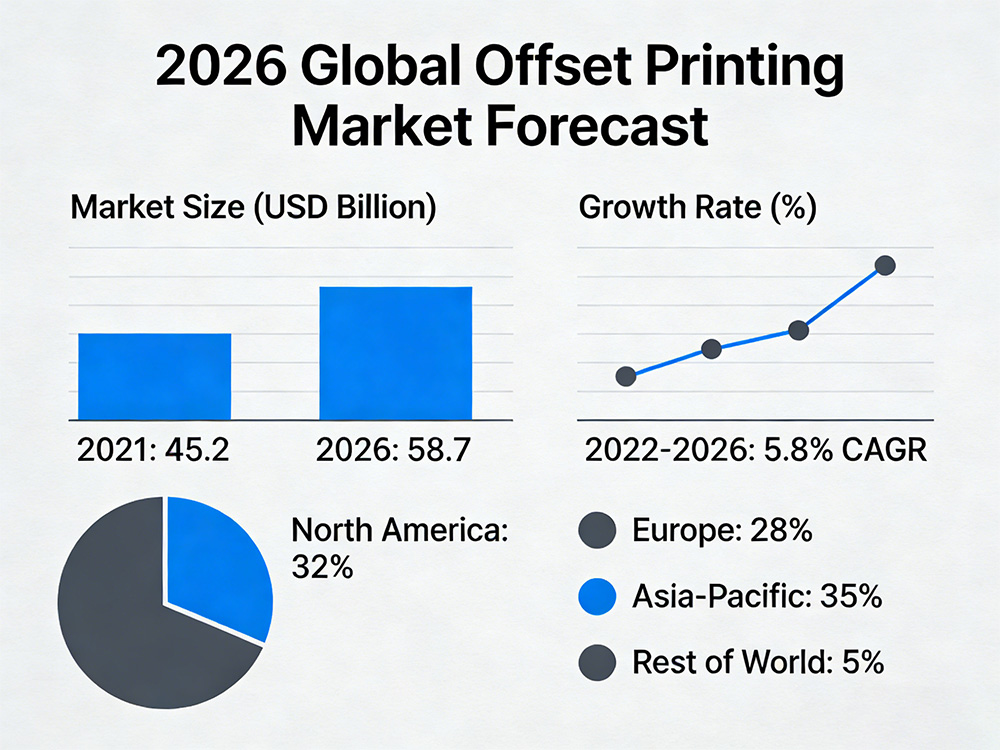
The global offset printing market is expected to grow steadily, reaching approximately $3.99 billion by 2032, with a CAGR of around 3.3%.
While traditional publishing segments such as newspapers and magazines continue to decline, packaging and commercial printing are emerging as major growth drivers:
- Packaging printing: ~9% annual growth
- Commercial printing: ~7% annual growth
- Publication printing: continued decline
Offset printing remains highly competitive in high-volume production due to its cost efficiency and color consistency.
2. Regional Market Insights
- Asia-Pacific: Fastest-growing region, driven by China, Southeast Asia, and India. Growth supported by expanding packaging demand and manufacturing capacity.
- North America: Mature market with stable growth (~2%), focusing on premium packaging and eco-friendly technologies.
- Europe: Strong regulatory environment promoting low-VOC and sustainable inks, with steady demand in high-end printing.
3. Key Drivers & Challenges
Drivers:
- Rising demand for packaging and labeling
- Global sustainability regulations
- Advancements in automation and hybrid printing
Challenges:
- Competition from digital printing in short runs
- Volatility in raw material costs
- Market consolidation among large ink manufacturers
II. Key Offset Ink Trends in 2026
1. Sustainability Becomes Standard
Environmental compliance is now a core requirement rather than a competitive advantage. Ink manufacturers are accelerating the shift toward eco-friendly formulations:
- Water-based and bio-based inks: Reduced VOC emissions and improved recyclability
- Low-VOC formulations: Widely adopted due to stricter regulations
- Biodegradable inks: Increasingly used in food and beverage packaging
Eco-friendly inks now represent a growing share of global production and are expected to dominate the market by 2030.
2. High-Performance Technologies
To improve efficiency and compete with digital printing, advanced ink technologies are gaining traction:
- UV-curable inks: Fast curing, high gloss, and strong durability
- EB-curable inks: Solvent-free with excellent performance in premium applications
- High-speed formulations: Optimized for modern offset presses and large-scale production
These innovations reduce drying time, improve print quality, and lower overall waste.
3. Application-Specific Ink Development
As offset printing shifts toward higher-value applications, specialized inks are becoming increasingly important:
- Packaging inks: Focus on food safety, low migration, and durability
- Commercial inks: Enhanced color vibrancy and print sharpness
- Specialty inks: Anti-counterfeiting, metallic, and functional inks
Packaging remains the largest and fastest-growing segment.
4. Market Consolidation & Supply Chain Optimization
The offset ink industry is becoming more concentrated, with leading global manufacturers expanding through mergers and acquisitions.
At the same time, companies are optimizing supply chains by integrating raw material sourcing and production processes to reduce costs and improve stability.
III. Outlook & Strategic Insights
In 2026, offset printing continues to demonstrate resilience, particularly in packaging and high-volume applications. While digital printing will continue to grow, offset remains essential for large-scale, cost-efficient production.
Key strategic priorities for industry players include:
- Investing in eco-friendly ink technologies
- Adopting hybrid printing workflows
- Expanding in high-growth regions such as Asia-Pacific
- Developing application-specific ink solutions
Looking ahead, sustainability and technological innovation will define the future of offset printing. By 2030, environmentally friendly inks and hybrid production models are expected to become the industry standard.
 StarColor Printing Ink
Leave a comment